The Dependency You Could Never Replace
Resilience plans assume the thing comes back. Sovereignty is the discipline of asking what happens if it does not.
Resilience plans assume the thing comes back. Sovereignty is the discipline of asking what happens if it does not. A dependency you could never replace is not a procurement detail or a technical debt item: it is a governance position, because it determines what your organisation is still able to do on a day you do not control. Most executives have never run that test, so they do not know which of their dependencies would end them.
The banana industry built a monoculture because monoculture was the rational choice
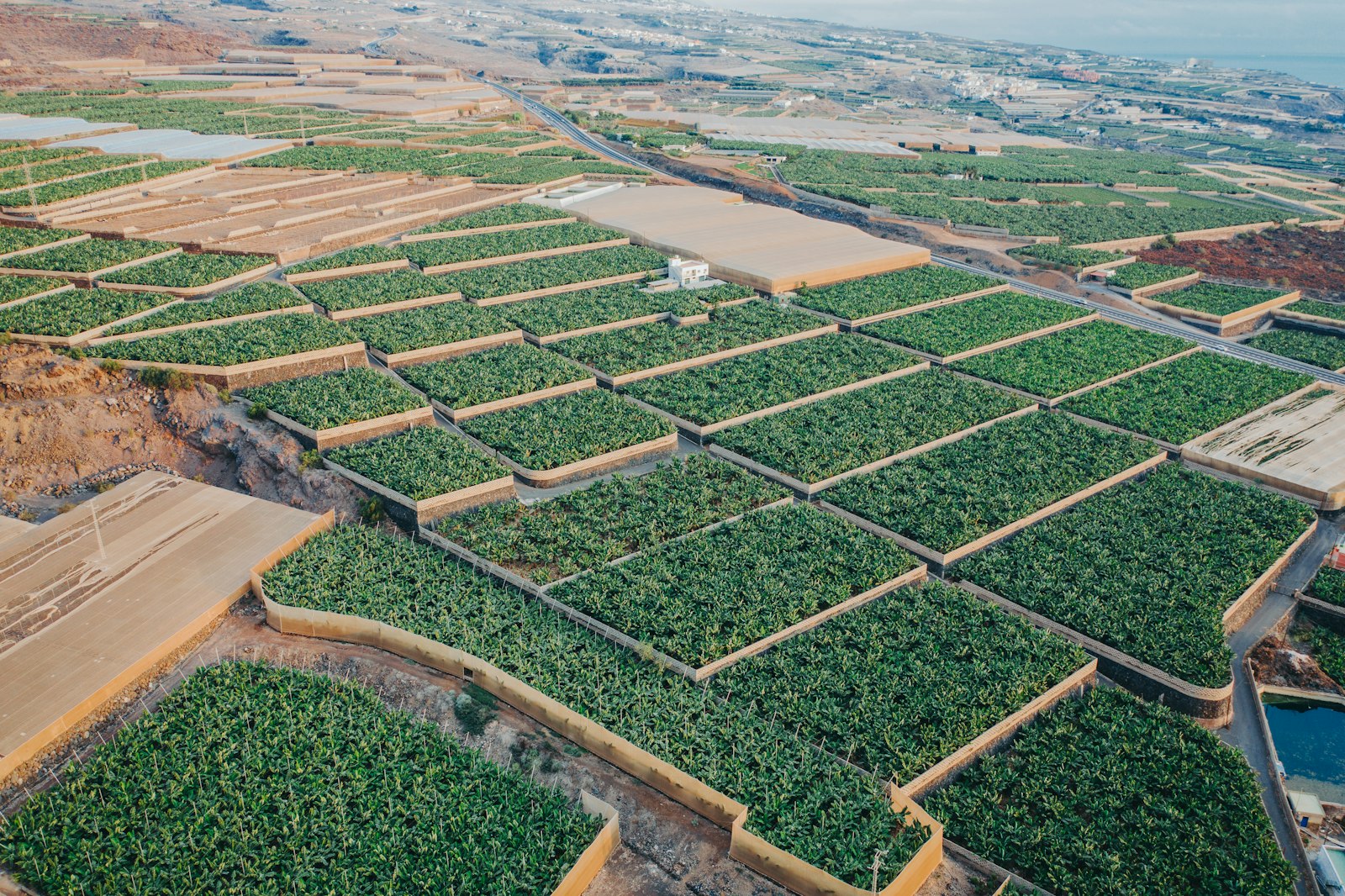
Until the 1950s, the banana the world ate was a single variety, the Gros Michel. It travelled well, it tasted better than the alternatives, and it was more profitable to grow at scale. Plantations across Central America planted it, and only it, propagated as clones with essentially no genetic diversity between one plant and the next.
That was not stupidity. It was optimisation. Every input, every logistics chain, every ripening room, every contract was tuned to one cultivar. Standardising on the best option is what rational operators do.
Then Fusarium wilt, known in the trade as Panama disease, moved through the plantations. There was no effective treatment. Contaminated soil stays contaminated for decades. And because every plant was genetically the same plant, what killed one killed all of them.
The industry switched to the Cavendish, which nobody considered superior. It was simply resistant to that particular strain. Shipping, ripening and retail chains were rebuilt around a fruit with different handling characteristics. The switch is often described as an adaptation. It was an evacuation.
The part worth holding onto is not the disease. It is that there was no second variety in commercial cultivation anywhere in the system. No fallback under test. No alternative ready. The industry had never been asked to keep one, because keeping one costs money every year and pays off only on a day that may never come.
Seventy years later the Cavendish accounts for the overwhelming majority of exported bananas. It is also a clone, also with very low genetic diversity. Since the late 2000s a new strain of the same fungus, Tropical Race 4, has been attacking it, and no fungicide works against it. The FAO has called for coordinated international action and funding; outbreaks have been recorded across Asia, in Australia, in Africa and, since 2019, in Latin America.
The industry is running the same experiment a second time, with the same structure, and knows it.
A dependency you cannot replace is a governance position, not a technical one
The reason this matters to an executive has nothing to do with agriculture and everything to do with the shape of the risk.
Business continuity planning is built around interruption. Recovery time objective, recovery point objective, failover, hot standby, incident command. Every metric in that vocabulary measures the gap between “it stopped” and “it started again”. The underlying assumption is never stated because it never needs to be: the thing comes back.
Most of the time it does. Cloud regions recover. Certificates get reissued. Providers publish a post-mortem and move on.
But a provider can also stop existing. It can be acquired and sunset. It can revoke your access over a commercial dispute. It can become unreachable because of a sanctions regime, an export control decision or an escalation between two governments that has nothing to do with you. It can be compromised so thoroughly that reconnecting it is no longer a defensible decision, whatever the vendor’s remediation report says.
None of those is an outage. There is no estimated restoration time, because there is no restoration.
That difference changes who owns the problem. An outage belongs to operations. A disappearance belongs to the board, because the question it raises is not “how fast can we recover” but “what is this organisation still capable of doing”. That is a question about the firm’s capacity to act, which is the only useful definition of sovereignty in a commercial context.
Sovereignty, used this way, is not a political posture and not an argument about where servers are located. It is a practical property: the ability to keep operating, or to switch, without a given third party. An organisation that cannot switch does not have a supplier relationship. It has a constraint it has agreed to call a supplier relationship.
The security layer has become the single point most likely to disappear
The uncomfortable version of this argument is that the controls bought to reduce risk are now among the most concentrated dependencies in the stack.
In October 2026, ConnectWise, a platform widely used by managed service providers, deliberately suspended its own Cloud Backup service, along with its SaaS Security and Cloud Management products, after identifying unauthorised access to application identities in the Cloud Backup environment. For several days, partners could not back up data, could not reach their archives, and could not restore. The vendor stated that existing archives remained encrypted and isolated, and that the suspension was precautionary. That is a responsible decision. It is also, from the customer’s chair, indistinguishable from the service not existing.
In the same period, Group-IB published research on a campaign attributed to an actor tracked as k0t, operating as an initial access broker against network edge devices. The report describes exploitation of a FortiWeb path traversal flaw and an authentication bypass in Palo Alto GlobalProtect, alongside brute-force activity against FortiGate appliances, and identifies more than 70,000 exposed credentials tied to network devices and directory dumps. The devices concerned are firewalls and remote access gateways: the equipment whose job is to be the boundary.
Neither event is unusual enough to be treated as an anomaly, and that is the point. The security and backup layer has consolidated onto a small number of platforms, each one deployed identically across tens of thousands of organisations. That is a monoculture with the same structural property as the plantation: a single pathogen that works against one instance works against all of them, and the organisations affected discover simultaneously that they share a fallback they do not have.
A worked case: the distributor that still had its data and could not use it
What follows is an archetype, assembled from patterns I have seen repeatedly rather than from one identifiable organisation. Details are generalised deliberately. Anyone who has sat in the room will recognise the shape.
A mid-sized distribution business, a few hundred people, three sites, family ownership now in its second generation. Not a technology company. Technology is a cost line that works, which is exactly how the executive team wants it.
Twelve years earlier, the business had bought an industry-specific order and stock management product from a small specialist vendor. That choice was correct at the time and remained correct for a decade. The product understood their trade: their pricing rules, their packaging units, their customer-specific catalogues, their delivery constraints. A generic ERP would have required eighteen months of configuration to do badly what this thing did out of the box. The vendor was responsive, the annual cost was modest, and over twelve years the product absorbed everything. Quotes, orders, stock, invoicing feeds, the customer portal, the EDI links to their three largest accounts.
Nobody decided to make it central. It became central one small integration at a time, each of which was individually sensible.
The vendor was acquired by a larger software group. The acquisition was announced in the usual language: continuity, investment, a stronger roadmap. For about a year nothing changed. Then the original founders left, support response times drifted, and the group announced that the product would reach end of life, with customers invited to migrate to the group’s strategic platform over an eighteen month window.
On paper, this is not a disaster. Eighteen months is a long time, there is a migration path, and the group has a professional services team.
In the room, the picture was different, and the gap between the two is the entire subject.
The first problem was that the data was available and not usable. The contract contained a perfectly standard export clause, and the vendor honoured it: a full database dump plus CSV extracts of every table. That is reversibility as a lawyer understands it. It is not reversibility as an operator experiences it. Twelve years of trade logic lived in the application, not in the data model: price derivation rules, substitution rules between references, the handling of customer-specific packaging, the exception cases that had accumulated as fields used for purposes their names did not describe. Exported, the tables were a faithful record of state and an unreadable record of meaning. Reconstructing the meaning required people who understood both the trade and the original design. The ones who understood the design had left with the founders.
The second problem was that the migration target did not fit, and that only became visible late. The group’s strategic platform was a good product for a different shape of business. The trade specifics that made the original worth buying were precisely the things it did not do. The honest options were to change the platform heavily, which reproduced the dependency with a larger vendor, or to change the way the business worked to match the platform, which is a commercial decision disguised as an IT project and had never been presented to the executive team as such.
The third problem was the one that actually hurt: the EDI links to the three largest accounts. Those customers represented a substantial share of revenue and each had its own integration, built incrementally over years, documented nowhere in a form anyone could act on. Those links were not an IT asset. They were the commercial relationship, expressed in software. Rebuilding them meant going back to each customer’s own IT organisation, entering their change queue, and waiting. None of those three customers had any reason to prioritise a supplier’s internal migration.
And the fourth problem was negotiating position. Once the end of life date was public and the alternatives were understood to be poor, every conversation happened from weakness. Extended support was available, at a price set by a vendor who knew exactly what the alternative cost. That is what an irreplaceable dependency does at the end: it converts into pricing power, at the moment you have the least room.
The outcome was not bankruptcy. It rarely is, and the stories that end in collapse are not the useful ones. The outcome was roughly two years during which the leadership team’s attention, the IT budget and the best operational people were committed to standing still. Projects that would have grown the business were postponed. The migration was completed later than planned and delivered a system that did less than the one it replaced, which the teams absorbed through manual work that is still there.
Nobody made a mistake. Every individual decision across twelve years was defensible. The organisation simply never asked, at any point, what it would do if that product ceased to exist, and by the time the question was forced the answer was expensive.
The cost of never asking is not an incident. It is two years of an organisation’s capacity.
Reversibility is a contractual and organisational property before it is a technical one
The most common error is to treat exit as an engineering problem.
Regulators have started to push in the other direction. The EU Data Act’s cloud switching provisions, applicable since 12 September 2025, give customers a right to terminate with a maximum notice period of two months, cap the transition period at thirty days by default, require a data retrieval window, and phase out switching charges entirely for EU customers from January 2027. Providers must make exit contractually possible.
That is real progress and it is not sufficient, because the obligations govern the handover of data and digital assets, not whether what you receive is operable anywhere else. A compliant export can still be a pile of tables whose meaning lived in the application. The law can oblige your supplier to hand you the keys. It cannot oblige the lock on the other side to accept them.
Which means reversibility has to be assessed as three separate things, and most assessments stop after the first.
The contractual layer: what can you demand, in what format, within what period, and at what cost. This is the layer everyone checks, and it is the easiest to fix, because it is negotiated at renewal when you still have leverage.
The operational layer: once exported, is the output usable without the original system. Can the business rules be reconstructed, by whom, from what documentation. This is almost never tested, and it is where the archetype above failed. The test is cheap: export once, in anger, and hand it to someone who was not involved in building it.
The human layer: who else could take this over. A small, excellent, loyal supplier with no identified successor is a concentration risk wearing a friendly face, and it is the single category executives are most reluctant to name out loud, because naming it feels like a judgement on a relationship that has worked for years. It is not. It is an observation about what happens when one person retires.
The “operate without” test produces a board-level answer in half a day
The exercise is simple enough that its absence is hard to justify.
List every external dependency. Software, hosting, suppliers, data flows, access paths. Not the large ones: all of them. Then apply one question to each, and only this question: if this disappeared permanently, not tomorrow morning as an outage but forever, what do we do.
Three groups form, every time.
Most entries land in the first: replaceable. Annoying, a few weeks of work, survivable. This group is always larger than the leadership team expects, which is the main source of relief the exercise produces.
A second group is replaceable under conditions: possible, slow, expensive, needs someone to own it.
The third group is small. Four or five entries. In front of those, the room goes quiet, because the honest answer is not “that would be difficult” but “we do not know”. Nobody can say where the data actually is, what shape it would come out in, who could rebuild the equivalent, or how long the business would hold while they did.
That third group is the real risk register. It is almost never the one in the document from last year, and its contents are rarely the expensive contracts under scrutiny. They are old, cheap, undocumented things that have worked for a long time.
Replacing everything is the wrong answer, and the expensive one
Bringing everything back in house trades an external dependency for an internal one, usually carried by two people who will eventually leave. It costs more, moves slower, and does not increase sovereignty: it relocates the monoculture by one floor.
Duplicating everything is worse. Running two of each system to protect against the disappearance of either is a cost that scales with the whole estate to mitigate a risk concentrated in five lines of it.
The proportionate answer is to treat the third group differently from the other two. For those entries, and only those, the organisation needs a credible alternative: a second route that has been tested at least once, an export that someone outside the original team has successfully read, an identified successor for the supplier who has no successor, a contractual exit that was negotiated while you still had leverage rather than after the end of life announcement.
That is not resilience. Resilience is what you build for things that come back. This is the other discipline, the one for things that do not, and it is the one almost nobody runs.
Ask the question before it is asked for you. On the day it asks itself, the answer is already fixed.
Sources
- Cavendish banana, cultivar history, replacement of the Gros Michel after Panama disease, clonal propagation and genetic uniformity, TR4 since the late 2000s and its arrival in Latin America in 2019: Wikipedia, Cavendish banana
- FAO call for coordinated international action and funding against Tropical Race 4, affected regions and recorded production losses: UN News, Global efforts needed to stop deadly banana disease
- ConnectWise suspension of Cloud Backup, SaaS Security and Cloud Management in October 2026 following unauthorised access to application identities: The Register, 19 October 2026
- k0t campaign against network edge devices, FortiWeb and GlobalProtect exploitation, FortiGate brute forcing, more than 70,000 exposed credentials: Group-IB, Stray Cat, Open Doors
- EU Data Act cloud switching obligations, applicability since 12 September 2025, notice and transition periods, phase-out of switching charges from January 2027: Taylor Wessing, Global Data Hub
FAQ
What is the difference between an outage and a dependency that disappears, and why does it matter to a board?
An outage has an estimated restoration time and belongs to operations; business continuity metrics like recovery time objective all assume the thing comes back. A disappearance — a supplier acquired and sunset, access revoked in a commercial dispute, a sanctions or export-control decision, a vendor compromised beyond defensible reconnection — has no restoration time at all. It belongs to the board, because the question it raises is not 'how fast can we recover' but 'what is this organisation still capable of doing'. An organisation that cannot switch does not have a supplier relationship; it has a constraint it has agreed to call one.
What are the three layers of reversibility to assess before depending on a supplier?
The contractual layer (what you can demand, in what format, within what period, at what cost — the easiest to fix, at renewal while you still have leverage); the operational layer (once exported, is the output usable without the original system — a compliant export can still be tables whose meaning lived in the application, and the test is to export once in anger and hand it to someone who didn't build it); and the human layer (who else could take over — a small, loyal supplier with no identified successor is a concentration risk). Regulation like the EU Data Act can oblige a supplier to hand over the keys, but not make the lock on the other side accept them.
Francois Aichelbaum
Life lover. Grumpy. Techy. Traveler. Founder of Privateer.