
A conductor doesn’t play any instrument. Not the cello, not the bassoon, not the oboe. The absence is not a deficiency. It is the condition that allows the function to exist. The non-technical CEO who tries to learn how to code so that they can decide on the code is, by the same mechanism, abandoning the seat from which a decision can be made. Mastery of the practice is not the prerequisite for the arbitration of the practice. Listening is.
The Conductor Plays Nothing
A symphony orchestra is a room full of virtuosos. The first violin has spent twenty years refining a bow stroke. The bassoonist knows the twelve millimeters of their reed by heart. The percussionist can place a cymbal crash inside a measure to within a fortieth of a second. Every chair is occupied by an instrumentalist whose technique took decades to build.
None of them conducts.
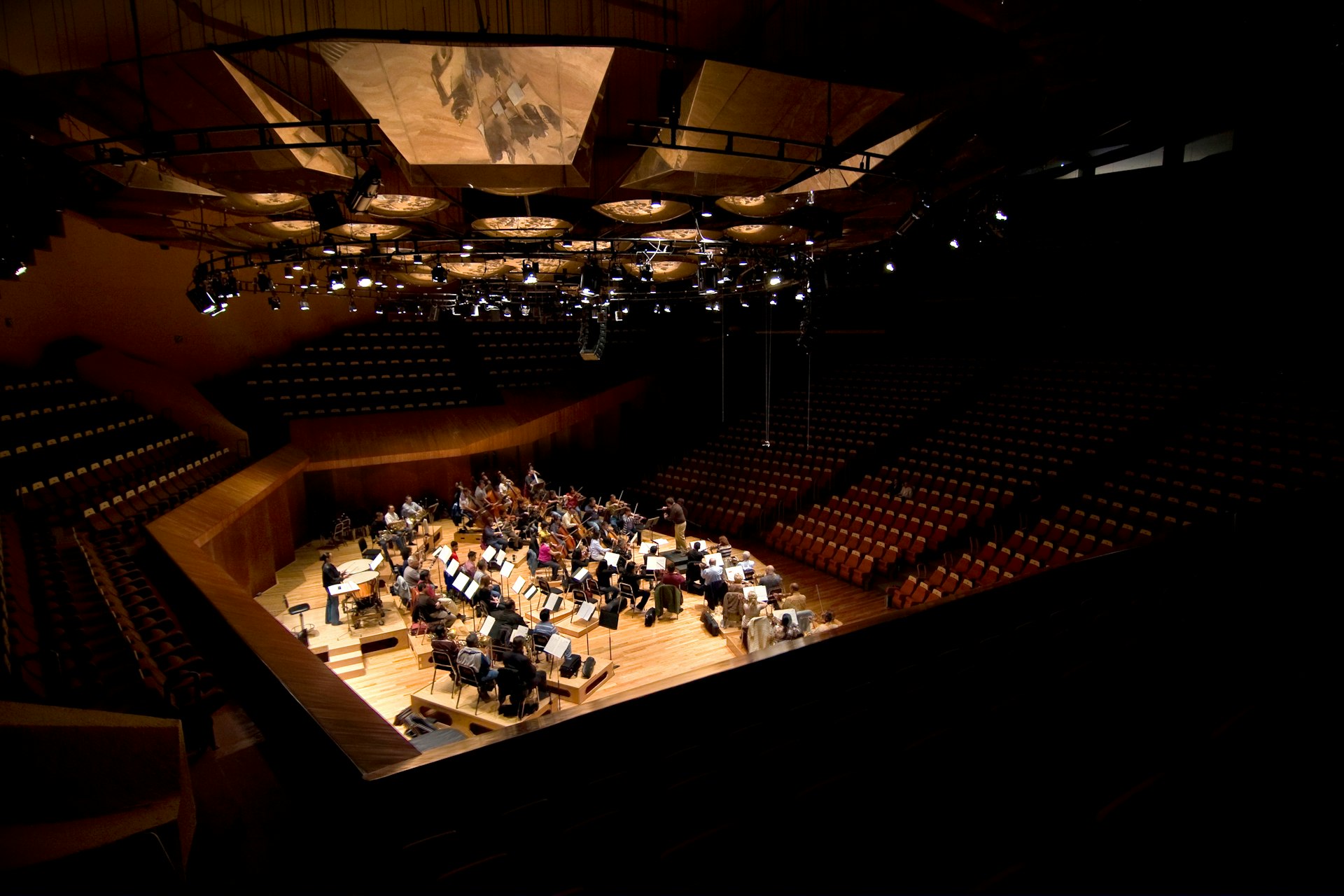
The conductor stands in front of all of them, baton in hand, and produces no sound. Bruno Walter, one of the great conductors of the twentieth century, wrote in Of Music and Music-Making (W. W. Norton, 1961) that the baton emits nothing. It points. It decides where the sound goes. The conductor’s function is the arbitration of a collective trajectory, not the execution of a melodic line.
This is not a polite division of labor. It is a structural condition. A conductor who tried to play the cello during the performance would lose the orchestra in the second measure. The gesture of playing and the gesture of conducting are incompatible inside the same second. You cannot hold a bow at three hundred and fifty notes per minute and a baton at the same time. One excludes the other.
For most of the nineteenth century, this was contested. Conductors were expected to be the best instrumentalist of the orchestra, the one who had occupied every chair before being entrusted with the podium. The twentieth century took that idea apart. By the time Walter wrote his book, it had become widely accepted in conservatories that the discipline of conducting was its own discipline, with its own training, its own ear, and its own demands. Mastery of an instrument was no longer the gateway. Some great conductors had been pianists, others had been violinists, others had begun their training as singers. The seat had stopped requiring a particular biography.
What the seat required was something else. Something harder to name. Something that did not show up in the practice rooms.
Audiation: Hearing Without Playing
Edwin Gordon, the American music education theorist (1927-2015), gave that capacity a name. He called it audiation. He developed the concept in Learning Sequences in Music: A Contemporary Music Learning Theory (GIA Publications, first edition 1980, multiple revised editions through the 2000s and 2010s) and refined it across forty years of work in music cognition.
Audiation, in Gordon’s formulation, is the capacity to hear music inwardly when no music is physically being played, and to comprehend music heard. It is not memory. It is not imagination. It is a structural mental operation in which a person can hold the architecture of a piece in their mind, perceive its harmonic and rhythmic logic, anticipate its movement, and notice when an actual performance deviates from what the piece should be.
A musician who can audiate well can read a score and hear the piece without an instrument in their hands. They can sit in a concert and notice that a phrase is taken too slowly even though the same phrase by the same orchestra was taken at the right tempo yesterday. They can detect, in real time, that something is off, before the off-ness becomes obvious to the rest of the room.
This is the capacity that defines a conductor. Not the capacity to play. The capacity to audiate.
Gordon’s work was developed in the context of music pedagogy. His point was that audiation can be cultivated. It is not a gift that some have and others lack. It is a trainable mental discipline. Children who are exposed early to varied musical material, in his framework, develop more refined audiation than children whose musical exposure is poor. Adults can also develop it, although more slowly, by deliberate listening, by score reading, by working with people who already have the capacity.
The implication, taken seriously, reframes a wide swath of professional life. The transferability is not obvious in Gordon’s text, but it does not take much imagination to apply. Any domain where collective output depends on the coordinated work of many specialists, and where someone has to arbitrate the whole, involves audiation. The architect of a building does not lay the bricks. They audiate the building. The film director does not operate the camera, does not write the score, does not sew the costumes. They audiate the film. The hospital chief of staff does not perform the surgery. They audiate the institution.
And the chief executive of a company does not write the code. Or build the warehouse. Or operate the call center. Or close the books. They audiate the company.
What a Guest Conductor Does Before a Difficult Concert
A few years ago, I worked as an interim infrastructure lead inside a French SaaS scale-up. The company sold video APIs to developers. The product was strong, the engineering team was talented, and the platform was growing fast enough that the choices made in the first two years were no longer adequate for the third year. Monitoring was incomplete. Deployments were manual. The architecture had been written for a customer base of a few hundred developers and was now serving thousands. The difficult concert was already on the calendar: the platform had to be industrialized, and it had to be industrialized in months, not years.
I came in as a guest conductor. The metaphor is not decorative. I was not the chief technology officer of the company. I was not going to become the chief technology officer of the company. I had been asked to come in, prepare the orchestra for the concert, conduct the concert, and leave. The contract was scoped that way from the first day.
I worked mostly alone. I built the monitoring stack that allowed the team to see, for the first time, what was actually happening on the platform in real time. I rewrote the deployment pipeline so that pushing to production was no longer a multi-hour manual procedure performed by one of two people who knew how. I refactored the architecture into a shape that the rest of the engineering team could read, modify, and operate without me.
The numbers moved. Availability went from 95% to 99.95%. Deployment to a new point of presence went from several hours of manual work to under fifteen minutes of automated work. The platform stopped being fragile.
When I left, the company recruited four people to take over the role I had been filling. Four. Not one. The work I had been doing alone, in compressed time, was structured to be picked up by a permanent team. The score I had assembled was readable. The passages I had drilled were workable. The orchestra could play the concert without me.
That is the function of a guest conductor. To accord the orchestra. To work the difficult passages. To hand back the keys. To leave.
I am writing this in 2026, several years after the mission ended. The company is still operating. The platform they took over still runs. The four people who replaced me have grown into a larger team. None of this is my work anymore. None of it ever was, in a permanent sense. The concert was theirs to play. My function was to make sure it could be played.
The mechanism is not unique to that one mission. I have done variations of it inside other organizations, with different difficult concerts in front of them. Each time, the discipline is the same. Do not install yourself. Do not become the chief titular conductor. Prepare the orchestra. Conduct the difficult concert. Leave.
The temptation to stay is real. There is always a reason to stay another quarter. There is always something else that could be tightened. The organization, having gotten used to the guest conductor, often offers to make the role permanent. The discipline is to refuse. The guest conductor who installs themselves becomes a different kind of figure entirely. They become a dependency. The orchestra stops learning to play without them. The whole point of the mission collapses.
The CEO Who Tries to Learn the Cello
The mistake non-technical CEOs make is the symmetric one. They look at their technology organization, conclude that they cannot decide on it because they do not understand it, and decide to spend their time learning to play the cello. They take online courses. They follow internal technical reviews with growing intensity. They ask their CTO to explain microservices, then containers, then Kubernetes, then service meshes. They build, over months, a fragile vocabulary.
At the end of that process, they have not become technologists. They have become non-technologists with a slightly larger lexicon. Their decisions on technology investments are not better. They are often worse, because the partial vocabulary creates the illusion of mastery, and the illusion of mastery silences the question that should have been asked first.
Worse, while they were busy trying to play the cello, they were not in the conductor’s seat. The function they should have been performing was empty. The technology organization, deprived of arbitration, drifted. The first violin took over the tempo because nobody was holding it. The orchestra became less ensemble and more aggregate.
The error is not laziness. It is misplaced diligence. The non-technical CEO who tries to learn to code believes they are doing the responsible thing. They are doing the wrong thing, more responsibly than most.
The right thing is to develop audiation of the technology organization. To learn to hear how a healthy technical conversation sounds, what a credible roadmap sounds like, where the voice of the architect should sit in the harmonic field, when the operations chair has gone flat. This is a different discipline. It involves listening to many technologists, over time, in many contexts. It involves reading not the code but the patterns of how technology decisions are made. It involves working, when needed, with people who can play and conduct fluently enough to bring the CEO’s ear up.
Audiation, in Gordon’s framework, is trainable. The CEO can develop it. They cannot develop it by learning to play the cello. They develop it by listening, by being exposed to varied technical material, by working with people who already have it.
The Function Survives the Practice
There is a phenomenon Gordon described, although he did not put it in these terms. The capacity to audiate can survive the loss of the capacity to play. A pianist who can no longer play, because of injury or illness or simply because they stopped practicing thirty years ago, may still be able to read a score and hear the piece. The gesture is gone. The audiation remains. In some cases, the audiation is sharper for being detached from the gesture, because the practitioner is no longer judging the piece by what their fingers can produce. They judge it by what it should be.
For the non-technical CEO, this is the news they did not know they needed. They do not need to acquire the gesture of writing code. They need to develop the audiation of a technology organization. The two are independent capacities. The function does not require the practice. In some cases, the function is even better performed by someone who never had the practice, because they are not tempted to second-guess the first violin by playing along with them.
The first violin should be left at the first chair. The CEO should hold the baton.
That is the whole point.
The Concert Belongs to Whoever Plays It
The conductor does not play the concert. The orchestra plays the concert. When the music is good, the conductor has done their job. When the music is bad, the conductor has not done their job. The conductor’s function is judged by the sound, not by the manuscript.
So is the CEO’s. The technology organization produces the work. The CEO does not produce the technology. When the technology is sound, the CEO has done their job. When it is incoherent, the CEO has not. It is not the engineers who get judged at that level. It is the seat from which the tempo was held, or not held.
A guest conductor, brought in for a difficult concert, sees this from inside. Most CEOs do not have a guest conductor in their lives. The few who do, in my experience, leave the mission with a sharper ear than they came in with. Not because they were taught to play. Because they were shown what it sounds like when the orchestra plays well.
That is what is on offer here. Not a cello lesson. An ear training.
Sources
- Bruno Walter, Of Music and Music-Making, W. W. Norton & Company, 1961.
- Edwin E. Gordon, Learning Sequences in Music: A Contemporary Music Learning Theory, GIA Publications, 1980 (revised editions through 2012).
- Edwin E. Gordon, Audiation, Music Educators Journal, 1985-2000.
- Wilhelm Furtwängler, Notebooks 1924-1954, ed. Michael Tanner, Quartet Books, 1989.
FAQ
Should a non-technical CEO learn to code in order to make better technology decisions?
No — that confuses mastery of a craft with the judgment needed to arbitrate it. A conductor doesn’t play cello, bassoon, or oboe, and that absence is precisely what lets them hear the whole orchestra and decide. A CEO who tries to master coding is abandoning the one position — the integrative, cross-domain view — from which good decisions actually get made.
What should a non-technical CEO develop instead of technical mastery?
Listening, in the sense of audiation: the ability to tell when something sounds right or wrong without being able to play every part yourself. That skill is learnable and durable, unlike hands-on technical fluency, which decays the moment you stop practicing it daily.